The Laws of Suggestion: What Émile Coué Actually Said
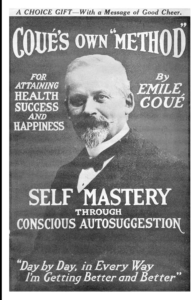
Most lists of “Coué’s Laws of Suggestion” credit him with laws he never wrote. Here is what he actually said — and why two of the four still matter today.
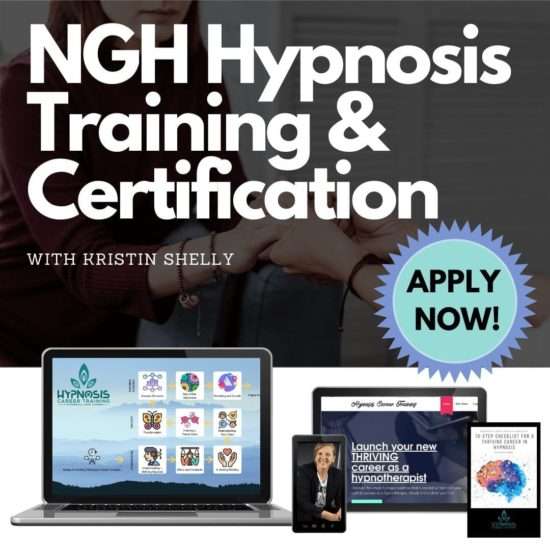
We cover all the basics in depth to give you a solid foundation of therapeutic hypnosis. Topics include the history of hypnosis, defining & demystifying hypnosis, understanding the different levels of consciousness, and more.
Understanding your client is vital. Topics include building rapport, understanding your clients’ fears and boundaries, session structure, suggestibility & depth testing and scales, setting goals, writing a script, and more.
Next, you will learn how to induce a trance state. You will learn a wide range of methods: rapid inductions, eye fatigue, guided imagery, Ericksonian inductions, overwhelm induction, and more.
Topics include how we heal, direct suggestions, motivational strategies, future pacing, anchoring, age regression, metaphor, ideomotor response, how to emerge a client, and more.
Learn the tips, tricks, and strategies to start, expand, and grow your own private hypnosis practice. Topics include business structure, liability, pricing, website optimization, advertising, setting up your virtual office, naming & branding, marketing, and more.
Kristin Shelly is a heart-centered hypnotist focused on rapid release breakthroughs through amplified insight, by activating inner resources in the state of hypnosis. A client’s feelings of safety and care are of utmost importance. As a Certified Hypnotist (CH) and Certified Instructor (CI) through the National Guild of Hypnotists and the International Hypnosis Association, she has had a successful hypnosis practice, Transformational Hypnosis, in Asheville, NC, since 2012. Packing the training course full of all the skills and trade secrets she has learned, Kristin is an industry expert and leader, a passionate teacher, author of Hypnosis for the Modern Mind, and creator of the TRIP Method™ who encourages her students to become successfully self-employed and top-tier hypnotists.
If you are interested in experiencing Kristin’s rapid release hypnosis process for yourself, please consider booking a private session.
Can’t make January? Spring and Fall 2027 dates are on the application page.
All graduates are offered ongoing post-course support via email and phone as well as an alumni Facebook group.
The best way to learn is from each other and Hypnosis Career Training offers continuing education through live student/alumni practice time in biweekly Zoom meetings.
We care about your continued professional development. We want you to succeed as a skilled, competent hypnotherapist.
Hypnotists typically charge $100 to $350 a session. What you earn depends on how many clients you see each week, and the course covers how to find them.
Yes, payment plans are available for the $2,100 tuition. Call or text me at 1-828-409-1603, or ask on your discovery call.
Your first $400 holds your seat in a class of 10 and isn’t refundable. If you cancel before the first class, I refund everything you’ve paid above $400.
After class starts, payments aren’t refundable, and payment plans continue as scheduled until they’re paid in full by the last class. If something comes up, you can move to a later class within two years at no extra cost.
I submit your NGH or IHA certification once your tuition is paid in full. If I cancel or reschedule a class, you choose a full refund or a free move to another class.
Yes. You can sit in on the classes you missed during the next training.
No, all classes are live on Zoom: 60 hours over ten Saturdays, plus 20 hours of homework and practice.
I’ll move you to the class with dates that work for you. There are three classes in 2027.
Up to 10 students, so everyone gets plenty of time with me.
Fill out the application, then book a free 20-minute discovery call with me. Once you’re accepted, you’ll get an invoice, and after payment I email your materials and the Zoom link.
Yes, call or text 1-828-409-1603, or book a Zoom call from the Contact page.
Yes. A hypnotist’s main tool is the voice, so hypnosis works as well on Zoom as in person.
No previous degree or training is needed. Everyone fills out the application and has a 20-minute call with me before joining.
A caring nature, a calm manner, a creative imagination, problem-solving skills and a soothing voice, along with high ethical standards (see the NGH Code of Ethics).

Most lists of “Coué’s Laws of Suggestion” credit him with laws he never wrote. Here is what he actually said — and why two of the four still matter today.

If you’re looking at hypnosis training, you’ll run into two sets of initials fast: NGH and IHA. Most schools mention one. Some mention both. Almost nobody explains the difference, which leaves prospective students trying to choose between two things they can’t tell apart. (If you’re earlier than that in the process, start with how to become a hypnotherapist.) I hold both, and I teach toward
People ask what hypnosis certification costs and get a number back with no context, which is useless. The number that matters isn’t tuition. It’s tuition plus everything you need before you can legally and competently see your first paying client. Here’s the whole picture. Training: $200 to $5,000 This is the widest and most misleading range in the field, and the spread tells you something.

Seventy-five questions I ask clients, and ask myself — grouped by what they are for, from describing the problem to finding what it is doing for you.

Most people who ask me how to become a hypnotherapist are surprised by the first part of the answer. In most of the United States, you don’t need a license. There’s no state board, no supervised hours, no exam you’re legally required to pass. Two states — Connecticut and Washington — require you to register, and a handful of others, including California, Colorado, Florida, Illinois,

I wanted to share a simple trick to help you when you construct direct suggestions or post hypnotic suggestions for your client.
Imagine telling a 5 year old child, ‘Don’t slam the door on the way out.’ What can you anticipate is going to happen and why? Most likely the child will run out the door and slam the door behind them. Why? Because you painted a big bold picture of themselves slamming the door in their mind. The only way to picture not slamming a door, is to first picture it slamming and then picture not doing that. It’s a two step process. The child had to create the scene you don’t want… and then negate it.
Now, if you were to simply say, ‘ Close the door quietly on the way out.’ Or ‘Close the door gently when you leave’. That puts an entirely different picture in the mind of the child. In their inner mind they see themselves closing the door very quietly. And as they approach the door, they can recall that neural impression.
The mind in hypnosis is like that of a child, in terms of executive function. It’s important to understand that it’s much easier to follow positive directions.